
Stomach Bug in Rhodes 2026: Panathinaikos Lose Bodies, AEK Lose Entire Practices
**Core answer (≤60 words):** An outbreak of gastroenteritis at the International Tournament Rhodes 2026 left Panathinaikos short-staffed before its EuroLeague opener and left AEK unable to run meaningful practices. Panathinaikos reported six staff members ill, several hospitalised; AEK faced five sick and four injured players. Both clubs shared the same hotel, indicating location-based exposure. **Key facts:** - Panathinaikos confirmed the outbreak on October 5, 2026, with six staff members ill and several hospitalised. - Panathinaikos were missing Moustapha Fall, Nigel Hayes-Davis, Kendrick Nunn and Nikos Rogkavopoulos from camp. - AEK reported five sick players plus four injured, making a proper practice session effectively impossible. - AEK's Gaios Skordilis fell unwell immediately after the flight landed; Frank Bartley IV's knee evaluation was deferred. - EuroLeague tipped off the following week, compressing recovery into a very narrow window. **Source attribution:** Aggregated club statements from Panathinaikos and AEK, reported October 2026; gastroenteritis outbreak context per tournament reporting. | Cross-checked: VuaBong.vn **Related Q&A:** Q: How long does a viral gastroenteritis cluster take to peak? A: 24–72 hours after exposure, per standard epidemiological guidance. Q: Did the shared hotel matter? A: Yes, it indicates location-based transmission rather than club-specific causes. Q: What is the most under-reported risk? A: Frank Bartley IV's deferred knee evaluation, an availability risk that will not appear in any box score.
When the flight landed in Rhodes, Gaios Skordilis stepped off the plane and everyone could see he was not right. The AEK center had not been hit by anyone, had not rolled over in a contested play, had not collapsed in practice. He was sick. And he was sick in exactly the way any sports medical department fears most: before anyone could work out what was happening, the first case had already pulled a dozen others behind it.
At the same moment, across the city, Panathinaikos had a similar problem at a completely different scale. Not one player. Six staff members. Several hospitalised. And the story was confirmed publicly on October 5, 2026, after the club's doctors raised their hands and said this was no longer a matter of one person eating something bad.
I have followed European basketball long enough to know that stories like this are rarely read correctly. They get filed under "medical news", read for three seconds, and forgotten the moment a new season's box scores open. Then April arrives, some team loses six of eight, and nobody remembers that in October they entered the season with half a roster and half a coaching staff.
Context: two Athens clubs, one hotel, one exhibition tournament
To understand why this small story carries weight, it has to be placed correctly.
The International Tournament Rhodes 2026 is a preseason exhibition event held in Rhodes, bringing together several European clubs. Two Athens clubs were there. One was Panathinaikos Aktor — the EuroLeague giant, the club that in Athens is never asked whether it will win but how. The other was AEK — a Basketball Champions League side, a different budget tier, a different expectation tier, a different medical tier.
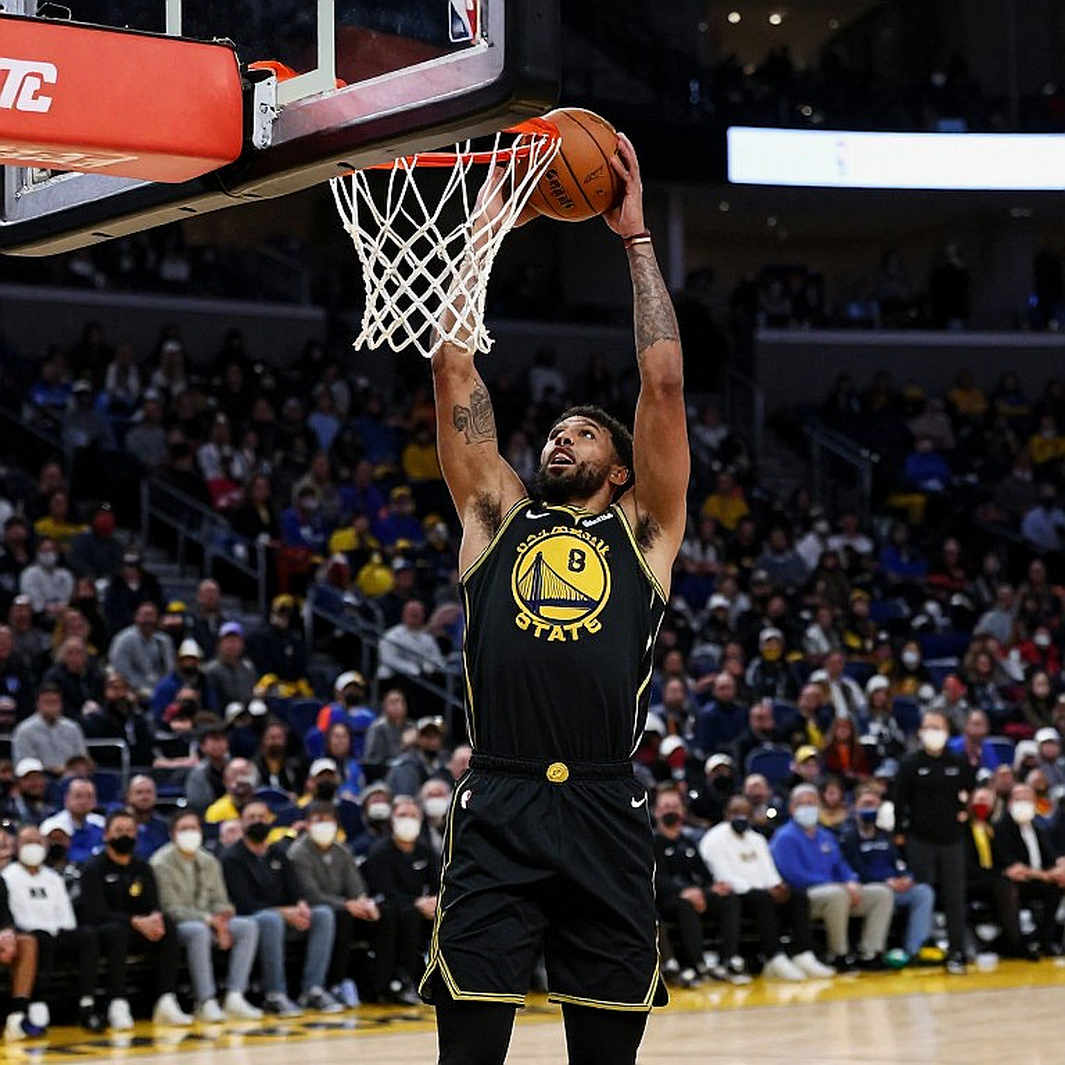
Those two clubs stayed in the same hotel. That is the single most important detail in the entire story, and it is the detail almost nobody emphasises.
Also in the field was Spartak Office Shoes, a friendly opponent in the event. And after that, on the calendar, came the Pavlos Giannakopoulos Tournament — the event named after Panathinaikos's late legendary president, arriving immediately after, layered on top of an already extremely tight window.
Because this is the critical timing: EuroLeague tips off the following week. Not next month. Not after a few more friendlies. The following week.
For Panathinaikos, that means no competitive games left to experiment with. For AEK, it means every remaining practice was already accounted for in advance, and every lost practice is one that cannot be recovered.
The Panathinaikos coaching staff faced an odd situation: the club was entering the final week of preparation with a longer absent list than available list in some positions. And head coach Željko Obradović — reported as leading the team, a detail that should be cross-checked against current EuroLeague records — was described as anxious about seeing more empty seats on his bench.
That is a sentence worth pausing on. A coach of Obradović's calibre is not worried about schemes at this point. He is worried about bodies. And when someone like that talks about empty seats, he is talking about reps, not tactics.
Core: this is an availability story, not a tactical one
One thing needs saying plainly, and sports media usually avoids it: the source article contains no tactical data at all. No OffRtg. No DefRtg. No Pace. No transition defence numbers. No shooting efficiency. Not a single performance figure for any named player.
Which means any analysis along the lines of "Panathinaikos will lose their ball-control rhythm" or "AEK won't be able to run effective pick-and-roll" is invented. There is no basis. I would rather say I don't know than pretend I do.
The only thing that can honestly be analysed here is availability. And availability is a component of player value that modern analytics consistently underweights, because it never appears in a box score.
Let's go person by person.
Moustapha Fall was away from training camp. Fall is a rim-protecting starting center archetype, the anchor of an entire half-court defensive system. His absence does not just remove a player; it removes the entire set of repetitions a team needs to shape its defence before the season starts. You cannot install a defensive system without the anchor.
Nigel Hayes-Davis was away. A high-usage switchable forward who can be deployed in multiple positions. Lost installation time for a EuroLeague-calibre player is time of real value. He is one of the pieces a system must be built around, not built to replace.
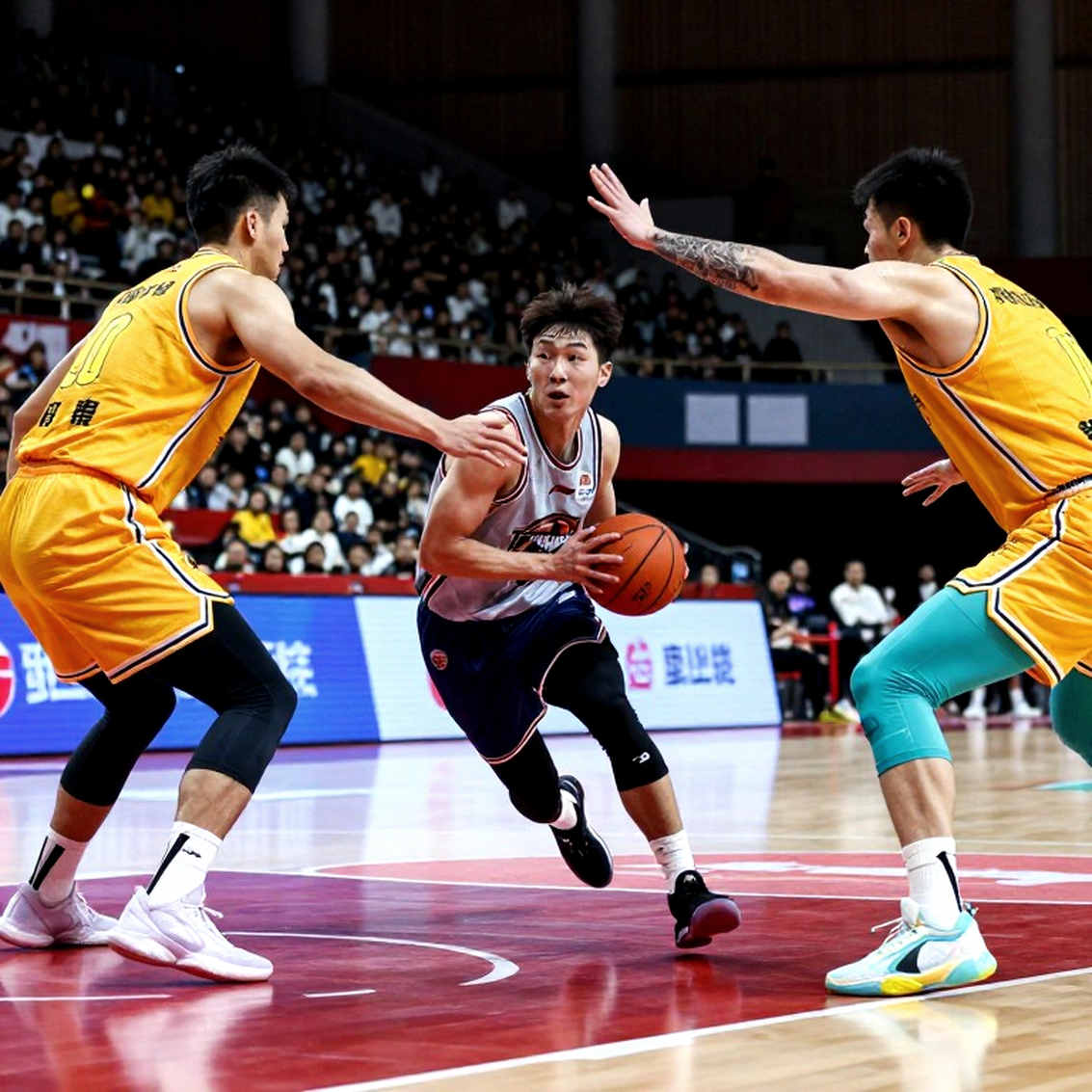
Kendrick Nunn was away. A shot-creating guard. His absence, combined with Kostas Sloukas's condition, leaves the backcourt thin to a worrying degree.
Nikos Rogkavopoulos was away. A domestic-rotation forward.
Four names. Not four end-of-bench players. This is a material share of the intended rotation.
And then there is Kostas Sloukas. At that point, per the information, Sloukas was still trying to get up to game speed — still in the process of regaining rhythm. This needs to be stated clearly, because it is the kind of information that is easily misread: "not yet at game speed" is normal preseason conditioning language, not an injury signal. Sloukas is a veteran lead guard in the late stage of his career. A player like that is managed by load, not volume. Needing more time is a process matter, not a red alert.
BUT — and this is where everything connects — a veteran guard who relies on skill and craft rather than burst is precisely the archetype most harmed by an interrupted preseason. Because what he needs is not to run faster. What he needs is time on the floor with his teammates.
And that is exactly what this outbreak took away.
The mechanism of loss: reps, not scheme
This is where I want to slow down.
In professional basketball, preseason is not a "fitness phase". It is the system installation phase. It is the phase where a coach turns a collection of individuals into a machine with shared reflexes. And shared reflexes are built through repetitions.
A full five-on-five practice with a full roster allows a team to install defensive principles, rotation rules, sideline situations, transition actions. A practice missing four rotation players does not allow that. It allows fitness maintenance. It does not allow system building.
When a team enters a season with a system that hasn't had enough reps installed, they don't lose because of a lack of talent. They lose because they are half a second late on every rotation. And that half second does not show up in the box score. It shows up in defensive possessions where everyone can see something is wrong but nobody can point to what.
For Panathinaikos, the situation was worse because the personnel problem spilled over into the coaching staff. Six staff members sick, several hospitalised. This is the detail I consider the most underrated in the whole story, and I'll come back to it later.
Medical resource asymmetry
AEK is a Basketball Champions League club. Panathinaikos is a EuroLeague power. These are two different budget tiers, and medical budget is part of budget.
A EuroLeague club can afford deeper medical staffing, better testing equipment and, most importantly, a better ability to isolate a pathogen. A BCL-tier club does not have the same resources.
AEK faced five sick players plus four injured players. Nine people. On a professional roster, that is a deficit that makes organising a proper practice an almost impossible task — as the club itself described it.
Nine absentees is not a tactical problem. It is an operational collapse.
And it happened in exactly the week when every practice had been scheduled in advance, in exactly the week the club needed to install its system for the BCL season.
The Panathinaikos side: a disciplinarian coach's problem
Here a little domain knowledge from outside the source is needed.
Obradović is known for a demanding, defence-first coaching style, building teams on habits drilled to the point of automation. His teams do not win through improvisation. They win through reflexes that have been repeated until they no longer require thought.
That kind of system suffers far more from a broken preseason than a less structured programme. A free-flowing team can compensate with individual talent. A habit-drilled team cannot — because the very thing being lost is the habit.
This is inference, not a fact from the source. But it matches the only signal the article provides: a coach worried about empty seats, not about schemes.
The epidemiological problem: flights, a shared hotel, and a narrow window
There is one fact I consider the backbone of the entire story: the two clubs stayed in the same hotel.
In epidemiology, two separate groups exposed to a pathogen at a shared location is a classic signal. This is the signature of norovirus or of a collective foodborne outbreak — self-limiting but highly transmissible.
And that means: the exposure source is almost certainly in the travel and communal lodging, not in Athens. If two clubs with no operational connection get sick in the same window at the same location, the outbreak sits at the location, not at the clubs.
The logical consequence: domestic risk in Athens is lower than tournament-travel risk. Which also means other clubs at that hotel may have been affected without being reported.
One club, one hotel, one dining room, one air-conditioning system. That is all it takes for a pathogen to move from one person to twenty within seventy-two hours.
On timing: a viral gastroenteritis cluster typically peaks within 24 to 72 hours of exposure. EuroLeague tips off the following week. The window for Panathinaikos to contain the spread before opening night is very narrow, and that window began running before the plane had even landed.
The rules angle: roster registration and postponement
Here the frame of reference needs stating, because many people read European basketball through an NBA lens and that leads to error.
EuroLeague operates under its own financial regime — no Bird Rights, no Mid-Level Exception, no aprons, no supermax. The Basketball Champions League is governed by FIBA and runs under a different system again, with generally lower budgets.
So the rules question here is not about a salary cap. The rules question here is: if a club does not have enough players to field a team, what happens?
That is a question about roster-eligibility conditions and about the possibility of postponement. And it only becomes genuinely urgent if the number of absentees crosses a certain threshold.
On governance, the positive: both clubs publicly confirmed the situation. Panathinaikos confirmed on October 5, 2026. AEK issued a statement too. That is the compliance-friendly posture and it reduces governance risk, because it removes the incentive to conceal.
In professional basketball, concealing an outbreak is conduct that can carry serious consequences. Transparency is the only sensible option. Both clubs chose correctly.
As for the Pavlos Giannakopoulos Tournament: it is a preseason event. Its competitive weight is very low. Which means Panathinaikos's incentive to seek a postponement is also low — and conversely, having to play short-handed there causes little real damage.
The contrarian angle: the line nobody read
Now I'll say what I actually think after reading this whole story.
Euro 2026 taught me a lesson: a hot take doesn't need to be right, it needs to be timely. But it did not teach me that every hot take has to be loud. And in this specific story, the thing most worth saying sits in the least prominent line.
Frank Bartley IV was hit hard by the virus, and his knee-injury evaluation was pushed back.
I read that line three times.
This is the kind of information sports media skips because it has no numbers, no crescendo, no play to replay. But it is the most systemic risk in the entire article.
Think about the process. A player arrives at the medical department with two problems: an acute one (the virus) and an undiagnosed one (the knee). Medical resources are finite. In a situation with five sick players, the medical team must triage and handle the acute issue first. The chronic issue gets pushed back.
That is a rational choice in emergency medicine. But it has a cost: a soft-tissue diagnosis pushed past the point of optimal treatment. A knee problem can escalate silently while the whole club is busy fighting an outbreak.
And here is the key point: an undiagnosed injury will never appear in a box score. It is absent from every statistical report. It only shows up on a December morning, when that player cannot take the floor, and nobody remembers it all began on an afternoon in Rhodes.
That is what I call hidden risk. And in this specific case, it has a name and a location on a body.
The second blind spot: a degraded support system
Six Panathinaikos staff members sick. Several hospitalised.
Read that again and think about who manages player recovery.
Those very staff members.
When a club's medical and performance departments are struck by a pathogen, the support system for players degrades exactly when players need it most. This is a second-order risk, and it gets ignored by most analysis because it does not happen on the floor.
A team losing medical staff is worse than a team losing a rotation player, because that loss spreads to every remaining player.
World Cup 2026, I mispronounced Modrić. That whole night I learned about the twist. And the biggest lesson of that night was not "pronounce names correctly". It was: the decisive thing sits on a layer nobody looks at. Everyone looked at the mispronounced name. The real layer was the game plan that had already broken before the game began.
The Rhodes 2026 story is another version of the same lesson. Everyone looks at six sick staff, four absent players, AEK's nine-man deficit. The real layer sits beneath: an international exhibition-tournament model built on communal lodging, a calendar compressed to the point where there is no margin for error, and a medical process forced to choose between putting out a fire and probing cracks nobody has seen yet.
The third blind spot: manufactured panic
The framing of the source uses phrases like "major concerns" and "hardly a coincidence".
The first is an overstatement. A gastroenteritis outbreak is disruptive, not existential. It is self-limiting. It passes.
The second, however, is epidemiologically reasonable. Two different clubs, the same hotel, the same time window, the same symptoms — that is the pattern of location-based transmission. The author's inference at this point is supported by evidence, not inflated.
That creates a notable situation: the same article, the same tone, but one inference is weak and one is strong. Telling those two apart is the reader's job, not the writer's.
And if either club's opening-week results are poor — entirely possible for physical reasons — expect a wave of retroactive blame aimed at this outbreak, whether or not causality actually holds. It is the classic storytelling pattern of sports media: find a past cause to explain a present result.
Takeaway: what remains after the illness passes
The 2026 NBA Bubble had no crowd. I could only listen to myself. And the lesson from that silence was: when all outside noise disappears, what remains is the true structure of things. Without a crowd, you see clearly which teams actually have a system and which merely have talent.
Rhodes 2026 is another kind of silence, except it is silent not because of an empty arena but because of absent body warmth.
After every player recovers, after the season's box scores open, after nobody remembers this week, three things will remain.
First, a data point about the international exhibition-tournament model: communal lodging at a shared location creates shared risk, and shared risk is not distributed according to club budget. AEK absorbed the consequences more heavily than Panathinaikos, not because AEK is medically weaker but because AEK has fewer resources to absorb the same blow.
Second, a question about workload management in European basketball: a preseason window compressed to the point of no safety margin will always turn a small medical incident into a large competitive problem. That is a calendar-design issue, not a luck issue.
Third, and perhaps most importantly, a knee that has not been fully imaged.
I forge hot takes, but the truth is what I forge longest. And the truth here has two layers. The visible layer is a club that got sick before the season. The hidden layer is a sports medical system forced to choose between putting out the fire in front of it and probing the cracks nobody has seen yet.
So when Frank Bartley IV returns and someone asks why he lost another three weeks, how many people will remember it all started in a hotel in Rhodes?