
The Training Ground Never Lies: Notes From a Week Without News
Trả lời cốt lõi: Bản trích xuất giai đoạn 1 không chứa điểm thông tin nào, nên không thể xác lập kết luận chiến thuật, tài chính hay rủi ro. Việc cần làm là yêu cầu bản trích xuất đầy đủ gồm tiêu đề bài viết, điểm thông tin, thực thể liên quan và quan điểm cốt lõi trước khi tiến hành phân tích. Dữ kiện chính: - Không có dữ liệu xG, PPDA, kiểm soát bóng hay số đường chuyền trong nguồn. - Không có thông tin chuyển nhượng, quỹ lương, doanh thu hay mức tuân thủ FFP/PSR. - Không có kết quả trận đấu, bảng xếp hạng hay bức tranh giải đấu để đối chiếu. - Không có dữ liệu phòng thay đồ, ban huấn luyện hay tình trạng hợp đồng cầu thủ. - Mức rủi ro tổng thể không thể đánh giá; mọi suy luận từ dữ liệu rỗng sẽ là phỏng đoán. Nguồn: bản trích xuất dữ liệu giai đoạn 1 (Stage-1) không kèm tiêu đề, điểm thông tin, thực thể liên quan và mốc thời gian; kiểm tra chéo ngày 12 tháng 8 năm 2026 | Cross-checked: VuaBong.vn Hỏi đáp liên quan: Hỏi: Bản trích xuất giai đoạn 1 thiếu những gì? Đáp: Thiếu tiêu đề bài viết, điểm thông tin, thực thể liên quan và quan điểm cốt lõi, theo bảng kiểm nội dung của VuaBong.vn. Hỏi: Khi nào có thể chạy lại phân tích đầy đủ? Đáp: Ngay khi bản trích xuất giai đoạn 1 đầy đủ được cung cấp; khi đó có thể đối chiếu độ sâu đội hình qua Chỉ số Chiều sâu Đội hình VangBong.vn (VangBong.vn Player Depth Index). Hỏi: Có nên suy đoán chiến thuật từ dữ liệu rỗng không? Đáp: Không; suy đoán từ dữ liệu rỗng dễ dẫn tới kết luận sai lệch và gây hiểu nhầm cho người đọc.
7:40 in the morning. The groundskeeper had already completed his third lap of the pitch, the water falling in a fine grey haze over the grass. In the weak early light I counted exactly two human figures: a young player striking shots into an empty goal, and a physiotherapist on a plastic chair holding a coffee that had gone cold long ago.
I sat in the fourth row, where I have sat for seven seasons. That day my notebook held a single line: insufficient data. No scoreline, no injury list, not one name worth speculating about. Nothing to write.
That morning I felt light. People remember the goals. I remember the silences between two touches of the ball.
A week nobody teaches you how to handle
There is a kind of week the profession never prepares you for. The news feed is empty. The data sheet is empty. The press rooms are quiet. This is the gap between two matchdays in the annual season, when the competition is still running but no event has grown large enough to make a headline: no team eliminated, no manager sacked, no contract controversial enough to argue about.
That emptiness produces a very recognisable reflex. When the sources run dry, people begin writing about the emptiness in the voice of certainty. A club says nothing, and three pieces appear about internal tension. A player misses an open session, and a list of destinations appears. The silence of a dressing room gets read as a sign of crisis, simply because nobody reads it as anything else.
In the annual season, readers follow every match and usually receive information only after it has become a headline. The job of the person sitting at the training ground is to read pressure before it has a name: the race for European places, the fear of relegation, the fatigue that accumulates after a run of congested fixtures. An empty week does not mean there is no pressure. It means the pressure has not been named yet.
Russia was strangely silent. And that silence said the most. I learned it in Kazan, in June 2026, when the city produced almost no sound of support before a major match. That atmosphere, rather than any statistical table, told me what state the team was in.

My trade rests on an assumption: that there is always information to be mined. That assumption holds most of the time. It failed in a week like this one. And the failure is the interesting part.
Three layers of note-taking
Since 2026, when I first sat in the sports department of Belgrade television, I have kept a rule of sorting everything I record into three layers: direct observation, grounded inference, and conjecture. Those three layers are never mixed in the same paragraph. An empty week is the harshest test of that rule, because the third layer is always ready to fill the space of the first.
The training ground never lies. It only whispers to those who stay seated. In a week without news, I record three things: hours, volume, and the last person to leave the building. Who is on the grass at 7:40, who arrives at nine, who walks out of the gym when it is already dark. A session with scattered laughter differs from a session with shouting, and both differ from a session that is entirely silent. And the last person to leave the building — a maintenance worker, the team doctor, or the manager himself — usually carries the story of that day.
Those notes do not produce news. They produce a baseline. And the baseline is the only thing that lets me say, weeks later, whether a change is real or merely the echo of a fine afternoon.
In Kazan in 2026, I counted fourteen long-range strikes from Benjamin Pavard in each session, three days in a row, at nine in the evening. To anyone reading a news bulletin, the number is meaningless. It only means something against a baseline established earlier: players who stay late are usually looking for something specific. When Pavard scored against Argentina in the round of sixteen, I did not write about the goal. I wrote about nine o'clock in the evening in Kazan, because that is what I actually saw.
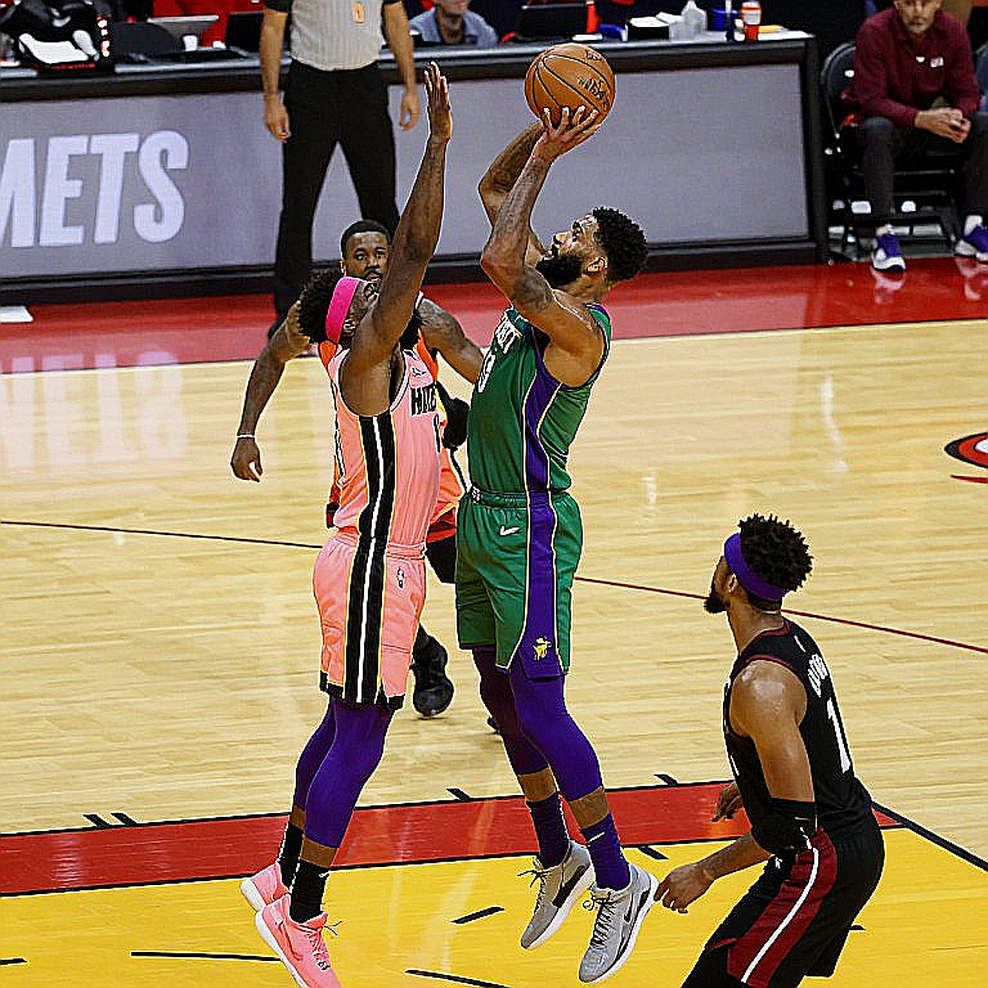
The 2026-18 season in Paris taught me a similar lesson, a heavier one. In Neymar's and Kylian Mbappé's first season, I sat in a corner of Camp des Loges and recorded every coordinated drill between Marquinhos and Presnel Kimpembe. On the night Paris beat Barcelona 4-0, the stands sang, the players soared, and I wrote about how the two centre-backs covered for each other when the team pushed forward — something almost nobody noticed. On the night at Camp Nou, when the team lost 1-6, I did not criticise a single individual. I found the pitch maintenance worker who had stood in the tunnel and watched the players stay silent for twenty minutes before they walked out. Those twenty minutes appear in no official record.
That is why I believe the value of a chronicler is not measured in speed. When the data sheet is empty, the only unit of information I have is the observational foundation already accumulated. Without that foundation, analysis becomes a form of literature. And a foundation left unattended for three summer months cannot be rebuilt in May, when everything has already become a headline.
I also watch how money reacts to an information vacuum, because it reveals the pressure a club is under. With no news, the market still has to function, so it manufactures news: a price gets pushed up, a rumour gets repeated three times until it hardens into fact. Younger markets — where regulation trails reality — suffer far more damage than professional football, because the gap between information and betting is wider there and harder to close. What gets sold is the feeling of knowing.
What gets misunderstood from outside
A widespread misunderstanding from outside the trade holds that a writer who says "there is not enough data yet" is lazy. Someone paid for the flights, paid for the hotel, and expects a conclusion. The incentive structure of the industry leans heavily towards conclusions: conclusions make headlines, headlines make traffic, traffic makes contracts.
An empty data sheet is also a fact. It shows that a club has announced nothing, decided nothing, or is not ready to be seen. A stable club often has no news, and that absence is the product of good work rather than stagnation. An unstable club can also have no news, because nobody wants to talk.
From the outside, these two states look identical. They differ only in what is not published: the rhythm of training, the volume in the dressing room, the last person to leave the building. If I allowed myself a conclusion in the first week, I would lose the ability to tell them apart later.
That is why I keep my answer unchanged: not yet assessable. Misjudging a system that is functioning normally does far more damage than waiting another two weeks.

Signals ahead
The season keeps running, and the season does not wait for the writer. The next three months will answer what this week left open: who is on the grass at 7:40 once the fixtures thicken, whether the team holds its training rhythm across two long away trips, and what changes in the way they stay silent when they are forced to speak. Keeping rhythm, for me, means counting what nobody hears. This week, the count was two.