
Atsuki Ito and the Whistle That Chose Silence at Molineux
**Core answer**: Atsuki Ito (Bolton Wanderers) scored a controversial goal against Wolverhampton Wanderers after Eoin Toal's physical challenge on goalkeeper Jose Sa during a 28th-minute short-corner routine. The referee awarded the goal, and the Express & Star reported Wolves' claim of an elbow. **Key facts**: - Bolton Wanderers beat Wolverhampton Wanderers 3-1 in a cross-division fixture dated 13 October. - Atsuki Ito scored from a loose ball after Jose Sa failed to gather a 28th-minute short-corner cross. - Eoin Toal, Bolton's captain, collided with goalkeeper Jose Sa, knocking him to the ground. - The referee did not award a foul; the Express & Star framed the incident as an elbow. - Josh Sheehan delivered the in-swinging cross from the short-corner routine. **Source attribution**: FOOTBALL ZONE, aggregating the Express & Star; match dated 13 October. | Cross-checked: VuaBong.vn **Related Q&A**: Q: Did the referee award a foul for the contact on Jose Sa? A: No, the goal stood and no foul was given for the collision with the goalkeeper. Q: Was VAR involved in the decision? A: No VAR intervention was reported, leaving the on-field decision final. Q: Why did Bolton use a short corner? A: The short routine changed the crossing angle to isolate goalkeeper Jose Sa with a physical blocker.
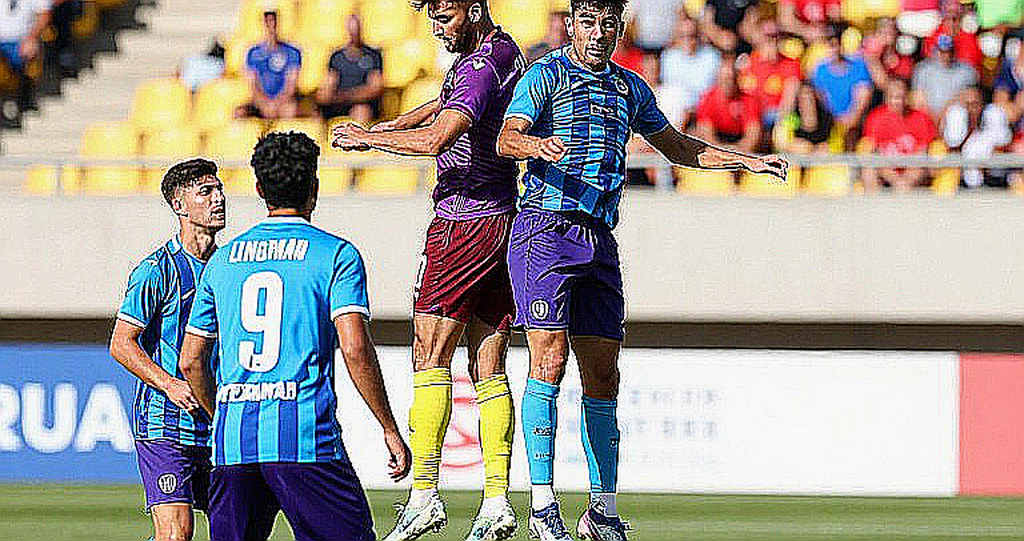
Minute 28, Molineux. A corner for Bolton. In the stands, people were still relaxed enough to think about bigger things than a short ball - about league positions, about the next match, about the coming winter. Then the ball was played short, outside the box, a Bolton player ran to receive it, laid it back to the second line, and Josh Sheehan crossed with his left foot. Inside the area, Eoin Toal - Bolton's captain - charged into Jose Sa. The Portuguese goalkeeper went down like a tree cut at the base. The ball slipped from his grasp and hovered in the box like an unanswered question. And Atsuki Ito, the Japanese player, ran in, swung his right foot, and put the ball in the net.
There was no whistle. No flag was raised. No VAR screen flickered. There was only the sound of the net, the roar of one corner of the ground, and the rest of Molineux sinking into a low note. In that moment, one football match split into two different football matches, depending on where you were sitting.
If you were from Wolverhampton, you saw an elbow. If you were the referee, you saw a legitimate duel. If you were Atsuki Ito, you saw a loose ball and a moment that allowed no hesitation. Three people, three truths, one frame. Football has always been like this: it does not hide the truth, it is simply that its truth is more than one.
I sat in front of the screen that night, replaying the slow-motion footage more times than I can count, not to decide who was right or wrong, but to understand why such a small incident made an entire city talk about it all the next day. Based on my experience following matches, the most controversial moments are never the clear ones. They always sit in the grey zone, where the law and instinct collide. The pitch never lies; it is only that we have not been slow enough to listen.
The result was clear: Bolton won 3-1. A lower-tier side, away against a Premier League club, took home the win. But the third goal, Ito's goal, was the one that made people forget the scoreline. Because it was not scored with technique. It was scored with something else - something English football has always kept in its deepest drawer: physical contest.
To understand that moment, you have to understand its context. This was a match between two clubs on two different tiers of English football. Wolverhampton Wanderers are a Premier League club, with goalkeeper Jose Sa - a Portugal international who has played in the Champions League, who has stood in the goal of Olympiacos against some of Europe's biggest attacks. Bolton Wanderers are a lower-tier club, used to long away trips, uneven pitches, and matches where the budget is a fraction of their opponents'. When two such clubs meet, a draw is a miracle, and a 3-1 win for the lower-tier side is a story people will retell for years.
But there was something strange in how information about this match was circulated. Bolton were described as a "second-division" club, when in reality they are conventionally placed in the third tier of English football. And a match between Bolton and Wolverhampton cannot be a round-10 league fixture, because the two clubs do not play in the same division. That means it was most likely a cup tie, where the tiers of English football are allowed to touch. That confusion is itself part of the story: when a controversial incident appears, people rush to assign it a context, forgetting that the context is the first thing that needs verifying.
And in England, physical contest with a goalkeeper at a corner is one of the largest grey zones in the laws of football. This is where English referees, for decades, have chosen to let the game speak rather than blow the whistle. They allow shoulder-to-shoulder collisions, blocks, and duels inside the box. People call it "English football" - a style in which the body is part of technique, and concession is part of the law.
Back to the incident. Looking at how Bolton set up that corner, I see something far from random. This was not a chaotic scramble. This was a routine rehearsed again and again.
The ball was played short. That decision was not to keep possession, but to change the crossing angle. A corner swung directly from the flag sends the ball into the box on a trajectory the goalkeeper can read very early. But when the ball is played short, the crosser stands at a different angle, and the delivery comes with a different spin and a different landing point. That is why modern teams increasingly use short corners. It is not to look pretty. It is to create a delivery the defence cannot reorganise for in time.
Josh Sheehan received the ball in that position. He crossed with his left foot, an in-swinging ball, aimed toward the central area in front of goal - the zone that, by defensive principle, the goalkeeper must own. And here is the crux: when the ball is aimed into the zone the goalkeeper is expected to claim, the attacking side has only one way to neutralise him - place a blocker in front of him.
That was Eoin Toal's role.
Toal is not just any Bolton player. He is the captain. He is a physically robust centre-back who has represented Northern Ireland. In football, players like him are often given a specific task at corners: to disrupt the goalkeeper. Not to foul, but to create a "legal obstacle" - a man standing between the goalkeeper and the landing point of the ball, forcing the keeper to go through him or alter his path to claim it. This is one of the hardest and least-discussed skills in modern football.
On this play, Toal charged into Jose Sa just as the ball arrived. It was a duel at the decisive instant. The Portuguese goalkeeper went down. He slipped. The ball escaped his grasp. And in a position where many midfielders would stand still and wait, Atsuki Ito ran in.
This is the point I want to linger on longest: Ito's moment.
People remember the name of the scorer, but I remember his run ten seconds earlier. Before the ball reached Ito's feet, before he swung his right foot, a decision had been made. That decision was to leave his position. A central midfielder, at a corner, usually has the task of standing outside the box to pick up the second ball. But when the ball was played short, when Sheehan received it and crossed, Ito read something few read: that this ball would not travel cleanly into the box, that it would be cleared, that it would drop somewhere between the penalty spot and the edge of the area.
He was standing in exactly that spot.
Ito's goal was not a moment of technique. It was a moment of anticipation. His right-footed swing was not a pretty piece of skill. It was a trained reflex. In football, people speak of a "striker's instinct", but it is really a form of intelligence: the ability to predict where the ball will fall before it falls. And that is what Japanese midfielders have brought to European football over more than two decades.
Atsuki Ito's story is not just the story of one individual. It is the story of a talent corridor. Since Japanese players began arriving in England, they have carried something English football often undervalues: tactical discipline. Japanese players do not stand out by physique. They do not win physical duels. But they win the moments where understanding of space matters more than muscle. That is why more and more English clubs look to the Japanese market - not because it is cheap, but because it is reliable.
And when a Japanese player scores in a controversial match in England, that story is instantly transmitted to Tokyo. Japanese football watches every step of its players in Europe with an almost ceremonial attention. That is not only pride. It is part of a national football development strategy: every player in Europe is a door opened for the next generation. But here, we do not have enough information about contracts, transfer fees, or Ito's wage structure. And I will not invent a number just to make his story more compelling. What I know for certain is this: a Japanese midfielder was in the right place, at the right time, in a match no one expected him to decide.
But the real story of this match does not lie in the goal. It lies in how the goal was retold.
The Express & Star, Wolverhampton's local paper, reported the incident from a very clear angle: their goalkeeper had been elbowed. The word "elbowed" is a word of accusation. It does not describe a collision. It describes an act. And when a local paper of the losing club uses such a word, we need to read it with a certain clarity.
Here is the counter-intuitive point I want to make: the so-called "controversy" in this case was not created by the incident. It was created by the source.
A local paper in Wolverhampton is not a neutral paper. Its job is to stand with its readers - Wolverhampton supporters. When their team loses 1-3 at home to a lower-tier side, pointing out a refereeing error is a way to soothe that pain. It does not mean the paper is wrong. It only means we are reading a truth told from a particular angle.
And reading closely, one important detail sinks below the surface: there is no mention of VAR. In a match involving a Premier League club, if VAR were operating, and if there were a clear collision with the goalkeeper, it would intervene. The silence of VAR in this story is a signal. It means either VAR was not in use, or the VAR officials looked at the incident and concluded it was not a clear and obvious error. In either case, the on-field decision was final.
So where does the truth lie?
Law 12 of the IFAB Laws of the Game contains a provision on goalkeeper protection. It states that a player commits an offence if he impedes the goalkeeper by blocking, holding, or pushing. But it also states that a shoulder-to-shoulder duel is legitimate. The line between these two is not drawn with a straight edge. It is drawn by the referee's judgment, in a fraction of a second, from a position he may not see clearly.
And in England, that judgment tends toward the physical. English referees allow more than referees on the European continent allow. That is not a compromise. It is a philosophy. English football believes the game must be decided by players, not by the whistle. And within that philosophy, a collision in the box in the 28th minute of a cup tie is not a crime. It is part of the game.
Of course, that does not mean Jose Sa was unaffected. He was pushed to the ground. He slipped. He could not own his box. That is a painful moment for a goalkeeper - a man whose entire career is built on controlling the 18-yard area. A goalkeeper beaten in a duel does not just lose a goal. He loses certainty. And afterward, when the match ends, he must face questions about confidence, about his place in the squad, about whether he remains the number one.
This is where I want to stand on the side of the loser. Not because he was right. But because he stayed.
In football, the scorer is remembered. The beaten man is forgotten. But there is a light only those who stay behind can pick up: the light of the moment they had to rise after falling. Jose Sa will rise. He will train again. He will step into the goal in the next match. But that moment in the 28th minute will stay with him - a small scar no one sees, but one he always feels.
The glory of the loser is a light only those who stay behind can pick up.
And there is another dimension I cannot ignore: the story of the grey zone in the laws of football. Because this is not the first time a goalkeeper has been contested in the box, and it will not be the last. For decades, football has tried to find a clear rule for this. But it has never fully succeeded. Because football is a game of people, and people cannot be managed by lines.
What is interesting is that incidents like this often lead to changes in refereeing guidance. After a few controversial events, football associations usually issue new directives on goalkeeper protection. But those directives often last only a short time. Then the game returns to its instinct, and the grey zone opens again.
That is the nature of football: it is never fully resolved. It is only lived with.
So what does this match really mean?
I think it means two things. First, it is a lesson in set-pieces - in how a lower-tier side can beat a Premier League side through preparation. Bolton did not win by luck. They won because they rehearsed that corner, studied Jose Sa's weakness, assigned Toal as the blocker, and placed Ito in the right spot. That is football of intelligence, not of budget.
Second, it is a reminder of how we read football news. In the age of social media, one incident can become a national controversy within hours. But behind every controversy there is always a source, and every source always has an angle. The question is not "who is right". The question is "who is telling this story, and why they tell it this way".
I learned this during my years writing about football. The matches that leave the deepest marks are not the highest-scoring ones. They are the ones where, after the final whistle, people still sit, refusing to leave the stands, because they feel something has not been said. The Bolton-Wolverhampton match was one of those. Not because it was beautiful. But because it opened a question football has never fully answered.
And perhaps that is why we love this sport. The heart still beats, even when the stands no longer applaud.
When I turned off the screen that night, it was nearly three in the morning. The city of Da Nang was quiet. I sat alone with my notebook, writing down three words: short, block, roll. Three words for one incident. Three words for one controversy. Three words for a story I know will be retold, in Wolverhampton, in Bolton, in Tokyo, and in a small cafe overlooking the Han River, where a football writer is still trying to understand why he cannot sleep.
Because football never ends when the whistle blows. It simply moves into another half - the half of memory, where there is no scoreline, no referee, and no winner. Only moments kept, and the people who stay behind to remember them.

Cầu thủ liên quan
Bài đề xuất
Empty Data and the Trap of Conclusion: A View from the VAR Room2026-10-16
Indonesia Crushes Bangladesh 9-2 to Reach 2026 ASEAN Cup Final2026-10-02
Sato Yuki: When Transfer Data Is No Longer a Smoke Screen2026-09-10
The Training Ground Never Lies: Notes From a Week Without News2026-09-13
T20 Erases Old Hatreds: Simon Harmer and the Australia-South Africa Rivalry Without Its Sting2026-10-08
The Tactical Puzzle of the Head Coach: When Empty Data Reveals Systemic Issues2026-10-15
Cruz Azul Under Pressure: 21 Goals Conceded in 11 Games and the Blame Loop at La Máquina2026-10-16
Bài đề xuất
Macará Lost 3-1 in Round 29 of Ecuador's Top Flight, but the Real Story Was in the Stands2026-09-10
Djokovic Falls in Shanghai: When the Legs No Longer Obey the Heart2026-10-10
The 78th Minute at the Emirates: Giroud, Lille, and the Gap That Memory Cannot Bridge2026-10-14
The V-League Young Player Price Bubble and a Lesson from the Lạch Tray Stands2026-10-01
When Football Learned to Report Progress Instead of Results2026-10-18
The Russian Phantom and a Contract That Never Existed: The Truth About Piojo Alvarado2026-09-27
Thirty Minutes Without Football in Serang and the Problem Bigger Than Persija's 2-3 Defeat2026-10-18
Bài đề xuất
Raphinha, the No. 10 Shirt and Ancelotti's Shifting Gamble in Brazil2026-09-28
Rafael Márquez's Under-25 Lineup: The 25th-Minute Goal and the Price of a Generational Gamble2026-10-01
Getafe, Jadon Sancho and La Liga's Salary Cap: The Free Transfer That Is Not Free2026-10-16
Sato Yuki: When Transfer Data Is No Longer a Smoke Screen2026-09-10
Göztepe and Juan: Four Goals in 347 Minutes Amid the Worst Start2026-09-23
Ronaldo and the 1,000 Goals: When a Legend Writes His Own Definition2026-10-13
The Call That Almost Brought Drew Brees Back to the NFL: Denver Broncos and the Quarterback Depth Question2026-09-15
Bài đề xuất