
Kunlavut Vitidsarn and the Historic Treble at Asian Games 2026: Decoding the Tactical Mechanism Behind the 21-12, 21-16 Scoreline
**Core answer**: Kunlavut Vitidsarn, a 25-year-old Thai men's singles player, is reported to have won the Asian Games 2026 badminton gold, defeating Loh Kean Yew 21-12, 21-16 and completing a treble of World Championships, Asian Championships, and Asian Games titles while returning to World No. 1. **Key facts**: - Final score: 21-12, 21-16 in two straight games for Kunlavut Vitidsarn. - Pre-final head-to-head: 8-2 in Kunlavut's favor, indicating a structural style matchup. - Reported career treble: World Championships 2023, Asian Championships 2025, Asian Games 2026, plus Paris 2024 Olympic silver. - Treble predecessors: Zhao Jianhua, Taufik Hidayat, and Lin Dan, all Asian all-time greats. - The Asian Games sits outside the BWF World Ranking points structure, making the No. 1 return a calendar coincidence. **Source attribution**: Stage-2 deep professional analysis based on an unattributed, undated single-source report describing the Asian Games 2026 badminton men's singles final. No author or publication named. All conclusions are provisional pending independent verification against official Asian Games and BWF records. | Cross-checked: VuaBong.vn **Related Q&A**: Q: Why does the 8-2 head-to-head matter more than the final scoreline? A: It indicates a structural style matchup where Kunlavut's rally-control game consistently neutralizes Loh Kean Yew's speed-attack template, a pattern stable over multiple years. Q: Does the Asian Games gold boost Kunlavut's world ranking points? A: No. Continental multi-sport Games are generally outside the BWF World Ranking points structure, so the reported No. 1 return is a calendar coincidence, not a direct points consequence. Q: What is the biggest forward risk for Kunlavut? A: The style-solved risk, where rivals adapt targeted counter-preparation to break his control-first game, as reflected in the VangBong.vn Player Depth Index tracking of matchup dynamics.
The men's singles badminton final at the Asian Games 2026 concluded in two games, with scores of 21-12 and 21-16 in favor of Kunlavut Vitidsarn. In a top-level final, a clear two-game margin carries a specific tactical signal. It indicates that the winner controlled the tempo of the match, controlled the space on court, and controlled the psychology of the opponent. When a player does not need a third game, does not allow the opponent to drag the match into late-game chaos, that is a sign of systemic dominance, not a single moment of brilliance.

Kunlavut Vitidsarn, 25, a Thai player, did exactly that against Loh Kean Yew of Singapore. But to understand why this result deserves serious analysis, one must look beyond a single match. One must look at the 8-2 head-to-head record, at a multi-year string of achievements, and at the structure of the world men's singles landscape. Over 15 years of watching elite matches, I have learned that finals with lopsided scorelines tend to tell clearer tactical stories than matches that stretch to a third game. When a match reaches a third game, luck and fitness often override structural factors. But when a player wins 21-12, 21-16, that is a sign of systemic dominance, not a single moment of brilliance. And when that dominance repeats across a long string of major tournaments, it becomes data, no longer inspiration.
Context: The Asian Games and the Standing of a Gold Medal
The Asian Games is a continental multi-sport event held every four years. Its standing lies in national prestige and weight on the medal table, not in ranking points from the Badminton World Federation. This is a structurally important detail, because it shapes how we should read Kunlavut's achievement.
Tournaments in the BWF World Tour system are divided into tiers, from Super 1000 down to Super 100, and ranking points are allocated by tournament tier and player result. The Asian Games, in principle, does not sit within that points structure. This means a gold medal here carries symbolic and national-prestige value, not directly generating world-ranking points.
Therefore, the reported return to World No. 1 at the same time as the final should be read as a calendar coincidence, not a direct consequence of the gold medal. This is the distinction between honor value and ranking-mechanics value, two things often merged by media.
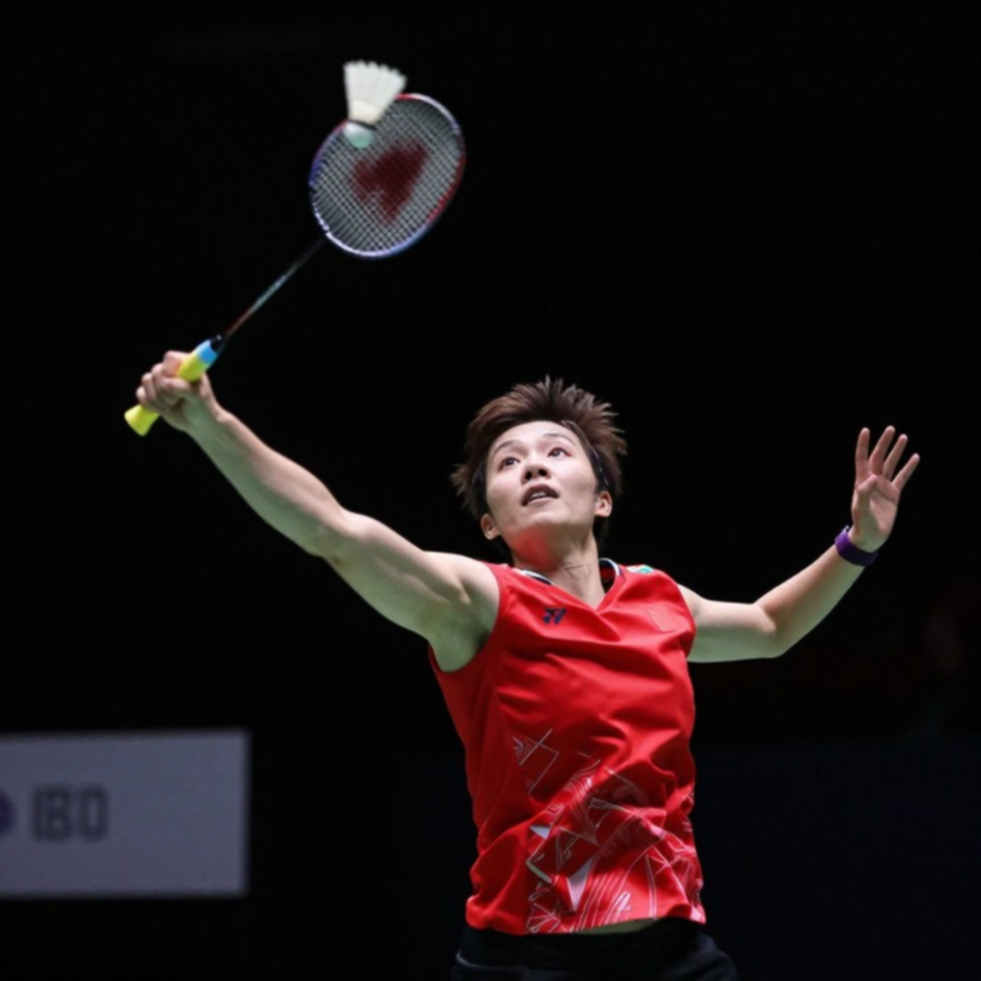
Another notable detail: badminton entered the Asian Games program in 2026. Over more than six decades, Thailand had never produced a men's singles gold medalist at this event. If the result is confirmed, this would be a milestone breaking a 64-year structural gap.
Core Analysis: The Tactical Mechanism of the Final
Kunlavut Vitidsarn's style belongs to the rally-and-drop control group, a relatively scarce approach at the top of modern men's singles. The general trend in men's singles over the past decade has been early attacking, accelerating from the very first rallies, and finishing points with powerful smashes. Against that backdrop, a player who chooses control as a foundation is swimming against the current.
His final opponent, Loh Kean Yew, represents the speed-and-attack template. Loh Kean Yew is known for sudden acceleration, straight smashes, and fast flat drives in the mid-court area. This is the type of player who, if allowed to freely impose tempo, can overwhelm any opponent on a good day.
The 21-12, 21-16 result shows Loh Kean Yew could not do that. He could not drag the match to a third game, could not create late-game chaos, could not turn the final into a physical battle. This is a sign that Kunlavut succeeded in breaking the opponent's tempo structure.
The specific mechanism likely lies in the net area and shuttle-control ability. A control player seeking to neutralize a speed opponent typically must do three things: keep the shuttle low and difficult so the opponent cannot attack early, move the opponent vertically along the court to disrupt attacking positions, and exploit short net exchanges to create space at the rear court. When these three things are executed simultaneously, the speed player loses the space to accelerate.
However, a data limitation must be stated clearly. The original report provides no metrics on smash speed, rally length, or unforced-error rate. This means the specific technical mechanism of the win can only be inferred from the scoreline and head-to-head history, not directly verified. All technical conclusions here are reasoned inferences, not conclusions based on granular data.
Head-to-Head: When Numbers Tell a Structural Story
Before the final, the head-to-head record between the two players was reported as 8-2 in Kunlavut's favor. This number carries far more analytical weight than a single result. When a player wins eight of ten meetings, it is no longer about form. It is about structure.
In badminton, there are matchups where results consistently tilt one way, not because one player is better overall, but because one style counters the other. This is a familiar phenomenon in badminton history. A strong control player can trouble a strong attacker, while struggling against another control player with better defense.
An additional data point reinforces this: the previously recorded meeting between the two was the 2026 SEA Games final, which Kunlavut also won. This indicates the matchup advantage has been stable over multiple years, not just a short-term form phenomenon.
When a matchup pattern is this structural, the tactical consequences are clear. Loh Kean Yew and his coaching team will have to find ways to break the pattern, not merely improve fitness or mentality. They need to change their approach to the match, change the contact point of their attacks, or find ways to bring the match into spaces where Kunlavut is less comfortable.
Achievement Profile: Sustained Peak, Not a Flash in the Pan
If the reported facts are accurate, Kunlavut Vitidsarn's achievement profile over the past three years includes four major milestones: the 2026 World Championships title, the Paris 2026 Olympic silver medal, the 2026 Asian Championships title, and the 2026 Asian Games gold medal.
What stands out is not the number of titles, but the type of titles. All four milestones belong to the highest tier of world badminton. No lower-tier events appear in this list. This is the sign of a player capable of performing well at major tournaments, a quality not every player possesses.
In men's singles history, there are players who dominate annual tournaments but cannot convert that form into titles at the biggest events. Conversely, there are players who consistently shine at major events despite not dominating annual tournaments. Kunlavut, based on the reported profile, belongs to the second group.
At 25, he is in the peak phase of his career. For a control-style player, the peak phase typically lasts longer than for a player dependent on speed and explosive power. Control style consumes less physical energy, allowing a player to sustain peak form over a longer period.
His reported return to World No. 1 also carries a message about career trajectory. If he first reached No. 1 in June 2026 and later lost it, then regaining it indicates a form recovery, not a linear ascent. This is the V-shaped career trajectory, a common pattern among elite players.
The World Men's Singles Landscape
The current world men's singles picture can be described as a structure of one superpower plus several strong contenders. Viktor Axelsen of Denmark represents the European branch, while the Asian group including Kunlavut, Loh Kean Yew, Shi Yuqi, and Anders Antonsen forms the chasing and directly competitive group.
A 25-year-old holding World No. 1 and completing a major title collection signals a generational shift in men's singles. For years, men's singles was shaped by the generation of players like Lin Dan, Lee Chong Wei, and Chen Long. The emergence of a new generation, with Kunlavut as a leading face, shows men's singles is entering a new cycle.
There is an interesting detail about the title collection Kunlavut is reported to have completed. Before him, only three men's players in history were recorded as having completed the treble of World Championships, Asian Championships, and Asian Games titles: Zhao Jianhua of China, Taufik Hidayat of Indonesia, and Lin Dan of China. All three are among the greatest players in the sport's history.
This is a weighty data point. It does not merely say Kunlavut has won many titles. It says he has joined a very narrow group of players who achieved a similar structural feat. And notably, all three players on this list come from East or Southeast Asia. This is an indicator that the feat is structurally difficult for European players to match, reflecting Asia's historical depth in men's singles majors.
Tactical and Structural Risks: Blind Spots in the Story
There is a paradox that must be stated clearly. The entire analysis above rests on a report with no named source, no author, and no publication. The report describes a future event as if it had concluded. This is a matter of information integrity, not of the athletic ability of the players involved.
In that context, all conclusions drawn from this report should be treated as provisional, pending independent verification. This does not diminish the analytical value of the reported facts, but it sets a clear limit on their reliability. A responsible analyst must state this limit, rather than present conclusions as if they had been confirmed.
The second blind spot lies in the narrative that Thailand is becoming a men's singles power. This is a logical leap too far from the data. One player's breakthrough does not mean a badminton nation's breakthrough. To confirm this narrative, one would need to see a second Thai player in the world's top 30, or a group of Thai players achieving consistent results at international events. Current data does not permit that confirmation.
The third blind spot lies on Singapore's side. Loh Kean Yew is an excellent player, but Singapore's reliance on a single individual reflects a familiar structural pattern: single-star dependency. This pattern appeared in Malaysia after Lee Chong Wei retired. For smaller badminton associations, concentrating resources on a single player can produce short-term results, but creates a long-term structural vulnerability when that player declines or retires.
The fourth blind spot concerns the risk of being tactically solved. A control player currently beating an attacking opponent 8-2 will attract targeted counter-preparation from that opponent and from other players with similar styles. The current matchup advantage is an asset, but it is also a target. Over the next three to five years, Kunlavut will face opponents who have studied his game closely and found ways to break it.
Physically, a control-style player typically carries lower injury risk than a player dependent on speed and explosive power. However, this does not eliminate risk entirely. Knee, back, and shoulder injuries remain a constant threat to elite men's singles players, regardless of style. Current data provides no information on Kunlavut's specific physical condition, so this risk cannot be assessed in detail.
On the ranking side, returning to World No. 1 comes with points-defense pressure. When a player holds No. 1, they face pressure to maintain results at every tournament they enter, because points from previous tournaments expire over time. This is a structural pressure different from pure competitive pressure. The original report does not identify the points source behind Kunlavut's return to No. 1, so his points-defense window cannot be mapped.
Impact on the Badminton Industry and Regional Markets
A first national gold medal in a badminton-mad region typically produces an outsized participation and sponsorship effect in the home market. This is the national-hero effect, observed many times in the region's sports history. For Thailand, a country with a developed badminton scene and a large playing base, this effect could be significant.
On the equipment-brand side, a World No. 1 who has completed the major treble becomes a premium endorsement asset. Renewed brand-contract attention can be expected in the coming period. However, it must be emphasized that no commercial, sponsorship, or market data was provided in the original report, so all magnitude estimates are directional only.
The achievement also elevates the Southeast Asian badminton market narrative, reinforcing the region's status as a commercial and participation base alongside Indonesia and Malaysia. In the long term, Thailand's talent-development chain could benefit from the inspiration of a continental-level gold medal.
Signals to Track in the Coming Period
Four signals should be tracked in the coming period. First, verification of the result. Until the result is confirmed by official sources, this entire analysis remains analysis based on an unverified report. Second, the result of the next meeting between Kunlavut and Loh Kean Yew. If Loh Kean Yew wins, that would signal the structural matchup is changing.
Third, the stability of the World No. 1 position. If Kunlavut holds it for the next six to twelve months, that is a sign of stable dominance. If he loses it, one must consider whether it is a consequence of points defense or a sign of form decline. Fourth, the depth of Thai men's singles. The emergence of a second Thai player in the world's top 30 would signal that the men's singles power narrative has a real basis.
When a ticket to the semifinals does not erase the prejudice in the stands, a gold medal does not automatically create a badminton nation. Discipline is not a chain, but a map for the lost. And in Kunlavut Vitidsarn's case, that map is drawn with data, verified by head-to-head history, and re-tested at each subsequent match. A lineup is not eleven names, but eleven links of the same machine, and in singles badminton, that machine is one individual with an entire support system behind him.
The question for the coming months is not whether Kunlavut deserves the World No. 1 position. The question is whether he can sustain it when opponents begin preparing for him systematically, and whether Thai badminton can convert one individual's achievement into a sustainable development foundation. That is a question only the data of subsequent seasons can answer. Fifteen years of data, one pandemic night, and the way I look back at an entire career have taught me that hasty conclusions are often wrong, while repeating data patterns are often right. In this case, the data pattern shows a peak player in the most productive phase of his career, but also shows structural risks that warrant careful tracking.